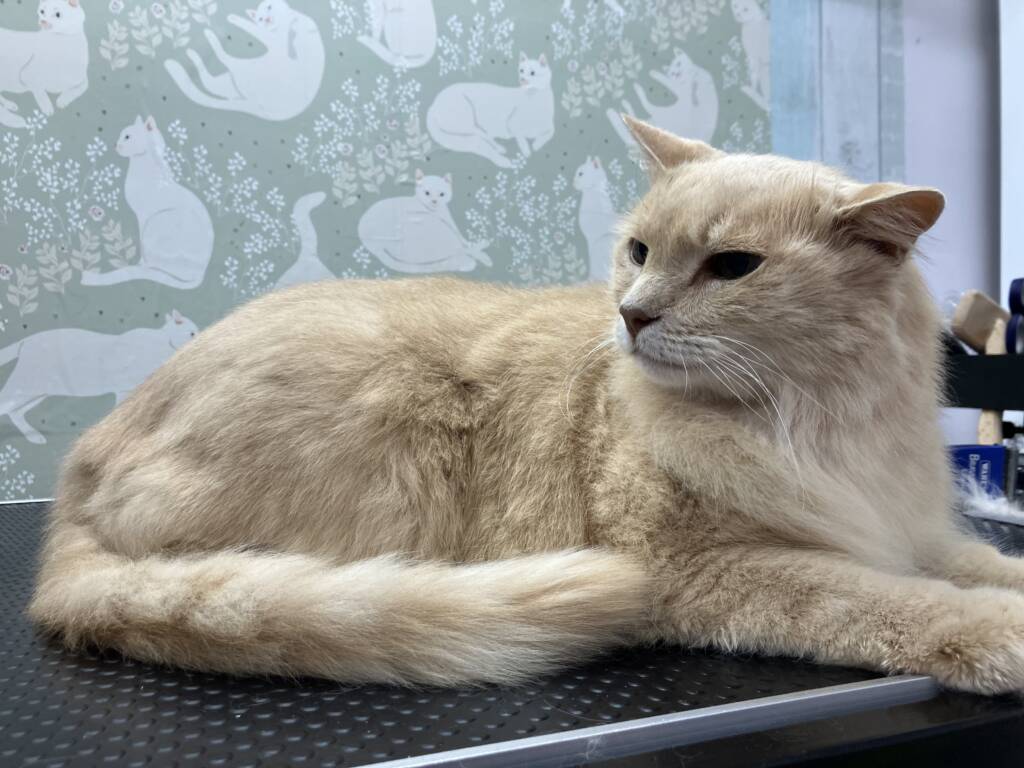
If your cat has always had a beautiful coat and has suddenly become matted “out of nowhere,” you’re not alone.
Sudden matting in senior cats (over 7 years of age) is incredibly common and is often one of the first visible signs that something else is going on beneath the surface. Matting isn’t just a grooming issue; it’s frequently a health and comfort issue.
“But My Cat Has Never Needed Grooming Before…”
Many cats go their entire lives without professional grooming. They self-groom when they’re young, flexible, and pain-free. However, as cats age, their ability to groom themselves changes, even if their personality and appetite seem normal.
When a senior cat suddenly starts matting, it’s usually because they can’t groom properly anymore, not because they don’t want to.
Common Reasons Senior Cats Become Matted
1. Arthritis (The Biggest Culprit)
Arthritis is extremely common in cats and vastly underdiagnosed.
- Over 60% of cats over 7 years
- Over 90% of cats over 12 years
have some degree of arthritis.
Arthritis makes it painful to twist, stretch, and reach areas like:
- The lower back
- Hips
- Base of the tail
- Belly and armpits
These are also the exact places matting usually starts.
Cats are masters at hiding pain, so coat changes are often the first sign owners notice.
2. Reduced Self-Grooming & More Sleeping
Senior cats tend to:
- Sleep more
- Move less
- Groom less frequently or for shorter periods
This leads to undercoat buildup, especially in medium and long-haired cats, but short-haired cats can mat too. Loose hair that would normally be removed through self-grooming becomes compacted and forms mats.
This reduced grooming is often linked to:
- Arthritis
- Muscle loss
- Dental pain
- Other underlying medical conditions
3. Sebum (Oil) Build-Up
As grooming decreases, natural oils (sebum) are no longer evenly distributed through the coat. This causes:
- Greasy or “sticky” fur
- Hair clumping together
- Mats forming faster and tighter
4. Thickened Nails & Reduced Activity
Older cats who are less active often develop thicker, overgrown nails, which can:
- Make walking uncomfortable
- Reduce movement even further
- Contribute to a cycle of inactivity and poor grooming
Why Matting Is a Big Deal (It Hurts)
Mats aren’t just cosmetic.
- They pull constantly on the skin
- They trap moisture, debris, and bacteria
- They can hide sores, infections, and parasites
- They restrict movement and increase pain
Matting hurts—especially for cats already dealing with joint pain.
The Best Thing You Can Do for a Matted Senior Cat
1. Book a Vet Check (Specifically for Pain)
Ask your vet to:
- Assess for joint pain or arthritis
- Run a senior blood panel
- Check nails, mobility, and body condition
Pain relief—when appropriate—can be life-changing for senior cats.
2. Professional Mat Removal
Severe matting should be handled by:
- A professional groomer experienced with senior cats, or
- Your vet clinic, if sedation or medical support is needed
Attempting to remove tight mats at home can be very painful and risky.
3. Start a Preventive Grooming Schedule
Once the mats are removed:
- Regular combing (even short, gentle sessions)
- Routine professional grooming- senior cats love the warmth of a bath and blow-dry
- Keeping nails trimmed regularly
Prevention is far kinder than repeated de-matting.
Supporting Joints & Skin from the Inside
Many senior cats benefit from supportive supplements (always follow veterinary advice):
- Antinol
- Rose hip powder
- Omega-3 fatty acids (for joints and skin health)
- Magnetic and red-light therapy
These can help reduce inflammation, improve mobility, and support coat condition.
If your cat is in pain, your vet may recommend prescription pain relief—this is not a failure, it’s compassionate care.
Final Thoughts
Sudden matting in a senior cat is rarely “just grooming.” It’s often a quiet message that your cat is uncomfortable or struggling physically.
With:
- Veterinary care
- Pain management
- Professional grooming
- Ongoing coat maintenance
Senior cats can stay comfortable, dignified, and happy well into their golden years.
If your older cat has started matting—listen to what their coat is telling you.